Does TRT Cause Acne? Causes, Risk Factors, and Treatment Options
5 min read
AUTHOR

MEDICALLY REVIEWED BY

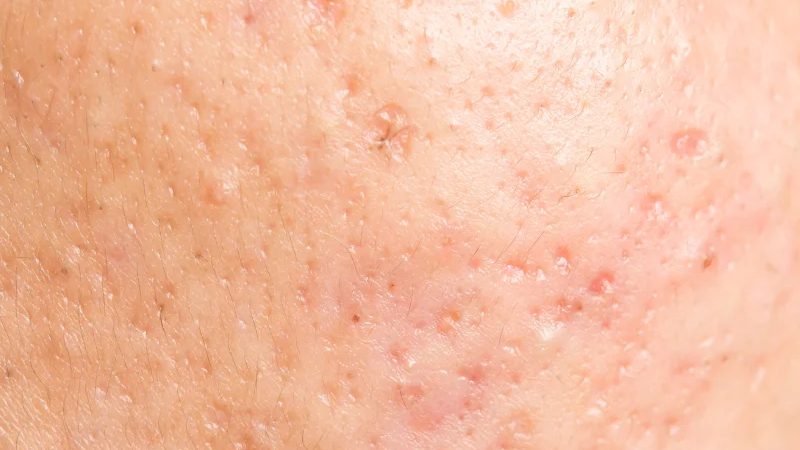
You start testosterone replacement therapy and, within weeks, notice your skin changing. Breakouts on your face, back, or chest where none existed before. You may be wondering: does TRT cause acne - or is something else going on?
The short answer is yes, TRT can cause acne. But that answer comes with important context. Not everyone on testosterone therapy develops skin problems, the severity varies considerably from person to person, and when acne does occur, it is typically manageable without stopping treatment. Understanding why does TRT cause acne - and what you can do about it - starts with the biology of how testosterone interacts with your skin.
Why Does TRT Cause Acne? The Hormone-Skin Connection
Acne is not simply a skin condition; it is, at its core, a hormonal one. Research identifies four primary drivers: androgen-stimulated sebum overproduction, abnormal follicular keratinization, colonization by the bacterium Cutibacterium acnes, and an inflammatory cascade that follows (Vasam et al., Biochemistry and Biophysics Reports, 2023).
Androgens - the family of hormones that includes testosterone - are the primary regulators of sebaceous gland activity. When testosterone enters sebaceous gland cells, an enzyme called 5α-reductase type 1 converts it into dihydrotestosterone (DHT), a significantly more potent androgen (Ghosh et al., Indian Journal of Dermatology, 2014). DHT then binds to androgen receptors (AR) embedded in the nuclei of sebocytes - the cells that produce sebum - triggering the upregulation of lipogenic genes including sterol regulatory element binding proteins (SREBPs) and fatty acid synthase (Lai et al., Archives of Dermatological Research, 2012). The result is a marked increase in sebum production.
Excess sebum accumulates in hair follicles, creating an oxygen-depleted, lipid-rich environment that Cutibacterium acnes thrives in. This bacterium secretes a lipase enzyme that breaks down sebum triglycerides into fatty acids, which in turn provoke an inflammatory immune response - the redness, swelling, and pain characteristic of acne lesions (Vasam et al., 2023). Research also indicates that inflammation may precede visible hyperkeratinization in early lesion formation, suggesting the immune system is reacting to sebum changes before a comedone even forms (Kurokawa et al., Dermatology and Therapy, 2021).
The androgen receptor itself is central to this process. Studies demonstrate that individuals without functional androgen receptors do not develop acne, confirming that AR activation - not simply the presence of testosterone - is the mechanistic key (Lai et al., 2012; Rao et al., Cells, 2021).
When exogenous testosterone is introduced through TRT, total androgen load increases. In susceptible individuals, this pushes sebum production past the threshold where the follicular environment can remain balanced, triggering or worsening acne.
Who Is More Likely to Develop Acne on TRT?
Acne does not affect all TRT users equally. A scoping review found that acne occurred in 0.6–9.1% of TRT participants across clinical studies - a wide range reflecting meaningful individual variation (Abou Chawareb et al., Sexual Medicine Reviews, 2026). A separate study examining testosterone use in transmasculine individuals found acne prevalence rising from 6.3% before therapy to 31.1% after initiation (Radi et al., American Journal of Clinical Dermatology, 2022).
Factors that may increase susceptibility include:
- Prior acne history. Individuals who experienced significant acne during adolescence appear more likely to react to exogenous testosterone.
- Androgen receptor sensitivity. Genetic variation in the androgen receptor gene influences how strongly sebaceous glands respond to circulating androgens. Research confirms that acne severity correlates more with receptor sensitivity than with raw androgen levels alone (Iftikhar & Choudhry, Pakistan Journal of Medical Sciences, 2019).
- Age. Younger patients beginning TRT tend to have more reactive sebaceous glands than older individuals.
- Baseline skin type. Those with naturally oily skin have sebaceous glands already primed for high output; adding androgens can tip the balance more easily.
- Elevated DHT conversion. Some individuals convert testosterone to DHT at higher rates due to upregulated 5α-reductase activity, amplifying the signal reaching sebaceous gland receptors.

Does the TRT Formulation Affect Acne Risk?
Yes - and meaningfully so. The research consistently indicates that the delivery method of testosterone influences its dermatological side effect profile (Abou Chawareb et al., 2026).
Intramuscular injections (e.g., testosterone cypionate or enanthate) administered weekly or bi-weekly produce significant peaks and troughs in serum testosterone and DHT levels. These supraphysiological peaks expose sebaceous glands to high androgen concentrations in repeated pulses. The scoping review found injectable formulations were generally associated with higher rates of acne compared to other methods.
Transdermal gels and creams applied daily produce more stable, physiological testosterone levels without the sharp peaks associated with injections. More consistent levels appear to reduce the amplitude of the acne trigger. Clinical data places the incidence of acne at the lower end of the reported range for topical preparations.
Subcutaneous pellets release testosterone slowly over 3–6 months, producing stable hormone levels similar to gels. Some clinicians report favorable skin outcomes with pellets, though high-quality comparative data is more limited.
The practical implication: if you are experiencing acne on a particular TRT formulation - especially injections - a discussion with your prescribing clinician about adjusting injection frequency or transitioning to a daily transdermal option may be worthwhile before escalating to dermatological treatments.
How to Manage Acne While on TRT
Knowing how to get rid of acne from testosterone is a common and legitimate concern. Evidence-based management starts with the mildest effective intervention and steps up as needed.
Skincare Foundations
A consistent, gentle skincare routine addresses the surface environment:
- Gentle cleanser: Use a non-irritating, non-comedogenic face wash twice daily. Over-washing can trigger rebound sebum production.
- Non-comedogenic moisturizer: Dehydrated skin compensates by producing more sebum; skipping moisturizer is counterproductive.
- Broad-spectrum SPF: Sun exposure worsens post-inflammatory hyperpigmentation from acne lesions.
Topical Retinoids
Topical retinoids (tretinoin, adapalene, tazarotene) are first-line therapy for both comedonal and inflammatory acne per dermatology guidelines (Leyden et al., Dermatology and Therapy, 2017). They normalize follicular desquamation, reduce keratinocyte proliferation, and block Toll-like receptor inflammatory pathways. Initial irritation typically peaks within 1–2 weeks and resolves with consistent use.
Benzoyl Peroxide
Benzoyl peroxide delivers antimicrobial activity directly against C. acnes without the antibiotic resistance concerns of oral antibiotics. Available over the counter in concentrations from 2.5–10%; lower concentrations offer similar efficacy with less irritation.
Clascoterone (Winlevi)
The first topical anti-androgen approved for acne, clascoterone competitively inhibits androgen receptors directly in sebaceous glands and hair follicles without meaningfully entering systemic circulation (Kurokawa et al., 2021). This makes it a particularly relevant option for individuals on TRT who cannot reduce their systemic androgen levels - it blunts the sebaceous gland's response to DHT locally.
Dose and Formulation Review
If acne is moderate to severe or unresponsive to topical management, a review of your TRT protocol with your prescribing clinician is appropriate. Adjustments may include reducing total weekly dose to the lower end of the therapeutic range, increasing injection frequency to reduce peak levels, or transitioning from injections to a daily transdermal gel or cream. These are clinical decisions to make in partnership with your provider.
Oral Antibiotics
For moderate inflammatory acne, short courses of oral doxycycline or minocycline remain an evidence-based option when topical therapy is insufficient.
When to Consult a Dermatologist
Many cases of TRT-related acne respond to over-the-counter topical treatments. Seek dermatological evaluation promptly if you experience:
- Moderate-to-severe inflammatory acne that does not improve with 6–8 weeks of topical treatment
- Nodular or cystic lesions - deep, painful lumps that carry significant scarring risk
- Extensive truncal acne (back or chest) that is painful or spreading
- Acne significantly affecting mood, self-esteem, or quality of life - the psychological burden warrants clinical attention equal to the physical presentation
- Rapid onset or signs of acne fulminans - a rare but serious inflammatory reaction requiring urgent evaluation
A dermatologist and your TRT-prescribing clinician can collaborate to find an approach that manages your skin while preserving the benefits of hormone optimization at Humanaut Health.
Key Takeaways
- Does TRT cause acne? Yes, it can - testosterone raises sebum production via the DHT → androgen receptor → sebaceous gland pathway, and excess sebum fuels C. acnes colonization and inflammation.
- Why does TRT cause acne is well-understood: it is androgen receptor activation in sebocytes, not simply elevated blood testosterone levels.
- Acne typically peaks at around 6 months and often becomes milder with continued long-term therapy (Wierckx et al., 2014).
- Injectable TRT formulations appear to carry higher acne risk than daily transdermal options due to supraphysiological hormonal peaks (Abou Chawareb et al., 2026).
- How to get rid of acne from testosterone: start with topical retinoids and benzoyl peroxide; consider clascoterone or oral antibiotics for moderate cases; review your TRT protocol with your clinician.
- Prior acne history and androgen receptor sensitivity are the strongest individual risk factors.
- Most cases are manageable without stopping TRT.
Frequently Asked Questions
Does TRT always cause acne?
No. Clinical studies report acne in 0.6–9.1% of TRT users, depending on formulation and population (Abou Chawareb et al., 2026). Many patients experience no skin changes at all. Those with a personal history of acne, oily skin, or high androgen receptor sensitivity appear most susceptible.
Why does TRT cause acne on my back and chest, not just my face?
Testosterone is distributed systemically, meaning sebaceous glands across the body - not just the face - are exposed to elevated androgens. The back, shoulders, and chest have dense sebaceous gland populations and are common sites for truncal acne in individuals on TRT.
Does acne from TRT go away on its own?
Often, yes. One study found that acne severity peaked at 6 months after initiating testosterone and that 93.9% of long-term users had no or mild acne after approximately 10 years of therapy (Wierckx et al., 2014). Effective treatments are available if acne is causing distress in the interim.
What is the best way to get rid of acne from testosterone?
The most evidence-supported approach starts with a consistent skincare routine, adds topical retinoids as the primary active treatment, and incorporates benzoyl peroxide for antimicrobial activity (Leyden et al., 2017). For persistent or moderate acne, clascoterone - the first topical anti-androgen - directly blocks androgen receptors in the skin without affecting systemic hormone levels (Kurokawa et al., 2021).
Is TRT acne different from regular acne?
Mechanistically, it is the same process - excess sebum, follicular blockage, C. acnes colonization, and inflammation - but driven by exogenous androgens. The treatment principles are identical, though the option to adjust the androgen source adds a management lever not available in endogenous acne.
Can I stay on TRT if I develop acne?
In most cases, yes. Acne from TRT is generally considered a manageable side effect rather than a reason to discontinue therapy. Discuss any skin changes with your prescribing clinician and explore the benefits of TRT for men to weigh the full clinical picture.
Does the type of testosterone formulation affect acne risk?
Yes. Injectable testosterone, particularly at longer intervals, produces higher hormonal peaks that may stress sebaceous glands more intensely. Daily transdermal gels maintain more stable levels and appear to carry lower acne risk (Abou Chawareb et al., 2026). A formulation discussion with your provider is a reasonable first step if you are on injections and struggling with acne.
Can women on TRT get acne?
Yes. Women prescribed low-dose testosterone for hormone optimization are subject to the same androgen → sebum pathway. Women may also have additional anti-androgenic hormonal tools available, such as oral contraceptives or spironolactone (Ghosh et al., 2014).
Take the Next Step
At Humanaut Health, our clinicians approach TRT as a personalized, proactive partnership - tracking not just your hormone levels but your whole-body response, including skin health. If you are experiencing acne or other side effects, we can help you find the formulation, dose, and support plan that works for your body.
References
- Abou Chawareb E, Campos L, Savio L, et al. "Dermatological adverse effects of testosterone replacement therapy: a scoping review of the literature." Sex Med Rev. 2026. DOI: 10.1093/sxmrev/qeaf061
- Wierckx K, Van de Peer F, Verhaeghe E, et al. "Short- and long-term clinical skin effects of testosterone treatment in trans men." J Sex Med. 2014. DOI: 10.1111/jsm.12366
- Radi R, Gold S, Acosta JP, Barron J, Yeung H. "Treating acne in transgender persons receiving testosterone: a practical guide." Am J Clin Dermatol. 2022. DOI: 10.1007/s40257-021-00665-w
- Lai JJ, Chang P, Lai KP, Chen L, Chang C. "The role of androgen and androgen receptor in skin-related disorders." Arch Dermatol Res. 2012. DOI: 10.1007/s00403-012-1265-x
- Iftikhar U, Choudhry N. "Serum levels of androgens in acne and their role in acne severity." Pak J Med Sci. 2019;35(1):146–150. DOI: 10.12669/pjms.35.1.131
- Ghosh S, Chaudhuri S, Jain VK, Aggarwal K. "Profiling and hormonal therapy for acne in women." Indian J Dermatol. 2014;59(2):107–115. DOI: 10.4103/0019-5154.127667
- Vasam M, Korutla S, Bohara RA. "Acne vulgaris: a review of the pathophysiology, treatment, and recent nanotechnology-based advances." Biochem Biophys Rep. 2023. DOI: 10.1016/j.bbrep.2023.101578
- Kurokawa I, Layton AM, Ogawa R. "Updated treatment for acne: targeted therapy based on pathogenesis." Dermatol Ther (Heidelb). 2021. DOI: 10.1007/s13555-021-00552-6
- Leyden J, Stein-Gold L, Weiss J. "Why topical retinoids are mainstay of therapy for acne." Dermatol Ther (Heidelb). 2017. DOI: 10.1007/s13555-017-0185-2
- Rao A, Douglas SC, Hall JM. "Endocrine disrupting chemicals, hormone receptors, and acne vulgaris: a connecting hypothesis." Cells. 2021. DOI: 10.3390/cells10061439